Temperament Refers to What Aspect of a Childs Development?
Introduction
Temperamental traits are biologically based characteristics manifest early in life, that contribute to individual differences in regulating and modulating emotion, attention, behavior, and motor activity (Rothbart, 1981, 2007; Gartstein and Rothbart, 2003). Because development emerges in the context of bidirectional interactions between the infant and his environment (Sameroff, 1975), temperament can influence how the baby receives and responds to stimuli in his environment, which can play a role in subsequent evolution. The developmental role of temperament has been generally studied with respect to socio-emotional domain where it has been associated with both externalizing and internalizing bug (i.e., Ullsperger et al., 2016; Rubin et al., 2017) and social competence (i.eastward., Baer et al., 2015; Penela et al., 2015). Temperament is idea to play a role also in linguistic communication acquisition, and is believed to partially business relationship for the variability in the rate and style of language acquisition (e.grand., the age of the first give-and-take, and rate of vocabulary development and syntactic emergence) during the kickoff 2 years of life (Bates et al., 1991; Lieven, 1997). Nevertheless, inquiry in this domain rather focused on the caregiver contributions, with a rich trunk of literature analyzing the quality of linguistic maternal input directed to the child and finding consequent results on its bear upon on infant linguistic outcomes (e.g., the quality of linguistic maternal input directed to the child; encounter Soderstrom, 2007, for a review). Less studies exist, on the kid's contribution such as that provided past the influence of temperamental traits, with the few existing studies reporting inconsistent findings (e.thousand., Dixon and Smith, 2000;Wolfe and Bell, 2007; Kubicek and Emde, 2012). One potential explanation for these discrepant results is the failure to consider a transactional arroyo (Sameroff, 1975), which includes both the child's contributions to language development (i.e., temperament) and the caregiver'south function (e.1000., quality of the maternal input). This study aims to address this gap in the literature past exploring the interaction between these two variables as factors of influence on early language acquisition.
Temperament and Language
The outset year of life is a period characterized past the rapid emergence of semantic and syntactic skills, which allows infants to decode the streams of oral communication directed to them and begin to associate sounds with symbolic significant. Two temperamentally based characteristics, mainly an infants' attentional control and the capacity for self-regulation, are thought to play a part in facilitating or inhibiting this process (Canfield and Saudino, 2016), although inquiry exploring this association has yielded discrepant results.
Regarding the temperamental characteristic of attention control, several studies have demonstrated a positive association betwixt temperament and language. Infants who demonstrated better attentional abilities, manifest by college scores in duration of orienting and persistence at vii and xiii months, as well demonstrated higher language comprehension at the cease of the first year (Dixon and Smith, 2000; Morales et al., 2000), and greater linguistic communication vocabulary productivity at 21 months (Dixon and Shore, 1997; Dixon and Smith, 2000; Salley et al., 2013). These findings suggested that more optimal attentional capacities (eastward.yard., greater sustained attention to the external environment) might facilitate a kid's abilities to focus on linguistically relevant events thereby contributing to vocabulary development. Other research yielded contradictory findings, with one written report (c.f. Wolfe and Bell, 2007) demonstrating a negative clan between the duration of orienting at viii months of historic period and receptive vocabulary at 4.five years, and other studies finding no association between attentional control temperament and language development (Kubicek and Emde, 2012; Pérez-Pereira et al., 2016). These disparate findings suggest a need for additional enquiry to farther examine the association betwixt the temperamental trait of attending control and language development.
In add-on to attention regulation, there is some research suggesting that individual differences in emotion expression and regulation are associated with linguistic communication development (Pérez-Pereira et al., 2016). Several studies have institute an clan between college positive bear upon (e.g., higher smiling, laugher, and easier soothability) at 7 and x months, and ameliorate language comprehension at 12 months of age (Morales et al., 2000) and better expressive linguistic communication at 14 months (Laake and Bridgett, 2014). Similarly, high levels of affect–extraversion at 2 years of historic period accept too been associated with advanced receptive and expressive linguistic communication at historic period iii, and better receptive language skills later at age 7 (Slomkowski et al., 1992). This association appears to exist bidirectional, wherein children with more advanced language evolution at thirteen months (i.due east., "early on talkers") were besides more likely to express greater positive bear on and lower negative touch on at 15 months (Kubicek and Emde, 2012). Taken together, this literature suggests that a greater expression of positive bear upon may help foster greater social exchanges in infancy during a critical catamenia of language development which may help facilitate language development in the infant and toddler period.
There is likewise a body of literature which suggests that more than negative affect (e.g., difficult temperament) is adversely associated with language development. McNally and Quigley (2014) found that infants rated equally having more difficult temperament at ix months had lower global language scores at three years of age, with like associations demonstrated for infants at 21 months of age (Dixon and Smith, 2000; Salley and Dixon, 2007). One potential mechanism explaining this association is that children's difficult temperament may interfere the utilization of attentional resources needed to process linguistically relevant information and may thus exist associated with suboptimal language development during a critical catamenia of language acquisition.
All the same, despite a trunk of literature suggesting an association betwixt emotion regulation and language development, in that location is as well a trunk of literature which has demonstrated contradictory findings. Some studies have failed to find clan betwixt the negative bear upon in infancy (eastward.k., distress to limitations calibration and difficult temperament) and language competencies in the toddler years (Dixon and Smith, 2000; Morales et al., 2000; Westerlund and Lagerberg, 2008; Canfield and Saudino, 2016). However, adding to the complication of our understanding of the association between emotion regulation and language, enquiry by Moreno and Robinson (2005) found that both greater expressions of joy and greater expressions of anger at 8 months were associated with better expressive language at 30 months, suggesting that emotional expression (both positive and negative) may play a role in facilitating language development past providing opportunities for the child to develop language through dyadic exchanges (Molfese et al., 2010).
An alternate view has suggested that it is neither positive or negative affective states which are associated with more optimal language development, just rather neutral affective states. Bloom (1990) proposed that more time spent in neutral states might facilitate early language learning by allowing for the cogitating opinion needed to construct the mental meanings for learning words. As a support of this proposal, Bloom and Capatides (1987) and Bloom et al. (1988, 2001) studies indicated a detrimental influence of both negative and positive affect on language conquering, while more neutral bear upon was associated with earlier earth learning.
Taken together, these disparate findings suggest that while some inquiry suggests that attentional and emotional temperamental aspects may play a role in fostering interactions which can enhance language development, further inquiry is needed to better sympathize the mechanism of clan between attention, emotion regulation, and the development of language competencies.
Maternal Input, Temperament and Linguistic communication Evolution
One potential caption for the disparate results in the cited literature is the lack of consideration of other aspects that may be associated with linguistic communication acquisition, and which may moderate the association between temperamental characteristics and linguistic communication competence, such as the quality of maternal linguistic input (e.one thousand., Soderstrom, 2007; Saint-Georges et al., 2013; Golinkoff et al., 2015). Enquiry plant that the variation in the amount, richness and construction of talk addressed to prelinguistic children revealed to be promotional for subsequent linguistic evolution (due east.g., Huttenlocher et al., 1991; Hampson and Nelson, 1993; Rowe, 2008; Weisleder and Fernald, 2013; Newman et al., 2016), with infants who are exposed to more variable and complex voice communication have greater opportunities to foster skills related to language estimation and speech segmentation. In addition, greater maternal lexical and syntactic diversity during the first year of infant life is associated with more than optimal child language competence in the second year of life (Huttenlocher et al., 1991; Bornstein et al., 1998; Goodman et al., 2008).
Since the demonstrated relevance of maternal input and the discrepancy in inquiry on temperament, our aim was to find whether the quality of the maternal linguistic input would act as a moderating factor for the association between infant temperament and infant linguistic communication development (Conture et al., 2013). Nosotros theorize that a kid's temperamental characteristics may play a role in subsequent language development by affecting the manner the infant receives and responds to input from the linguistic surround, and that the quality of the maternal linguistic input may moderate the clan betwixt baby temperament and baby language development. To the best of our cognition, only two studies take examined the topic in this way. Karrass and Braungart-Rieker (2003) reported that at 12 months maternal responsiveness to their children (e.chiliad., affective warmth) moderated the clan between the child's temperamental characteristic of "distress to novelty" and linguistic communication evolution 4 months later, with infants who demonstrated lower distress to novelty manifesting better language abilities in the context of more responsive mothering. In addition, Laake and Bridgett (2018) showed that for infants with more positive affect at 10 months, more supportive maternal interactions were associated with better expressive language at 14 months. While these studies highlight the interactive effects of infant temperament and responsive caregiving with more optimal language evolution, neither study examined the role of the maternal linguistic environment as a potential moderator of the association between temperament and language development.
The Present Report
Nearly studies on temperament and language evolution focus on children from 24 to 36 months of age. However, if the role of temperament on infants' responses to maternal linguistic stimuli is to be examined, it is necessary to examine these processes from an before age. Nosotros may expect babe temperament during the first year of life to play a office in language acquisition, whereas temperament in preschool historic period may manifest in the child'due south response to social contexts, potentially manifest as shyness, social inhibition and reticence to talk with others. While many studies have demonstrated correlations betwixt these variables, current research has failed to identify the mechanisms underlying these associations, suggesting the need for longitudinal studies to examine the processes by which temperament contributes to language development in infancy and toddler years.
In this study, we focused on three dimensions of temperament (babe attention, positive affect, and negative impact), using validated scales from the Infant Beliefs Questionnaire (Gartstein and Rothbart, 2003), that have been previously associated with language development. Babe attending was assessed by the duration of orienting scale, positive touch on was assessed past the smile and laughter scale, and negative affect was assessed by the distress to limitations calibration. Building on previous enquiry (c.f. Saffran et al., 2006), the influence of temperament on infant language has been measured with respect to productive lexicon at 18 months, and syntactic competence at 24 months of age, whereas the quality of maternal input was measured in term of lexical variability and syntactic complication. We hypothesized that children with temperamental skills characterized by higher attention and more positive, and less negative impact (due east.g., higher elapsing of orienting, college grinning and laugher and lower distress to limitations) would have better linguistic skills in the context of greater quality of maternal input, than children who were lower in those skills.
Materials and Methods
Participants
Seventy mother–infant dyads participated at the report. Participants were drawn from a larger longitudinal study on mother–infant relationship (Coppola et al., 2016) and were recruited from the public infirmary of an urban area within 2 days of the infant'southward birth. Mothers who signed an informed consent both for their own participation in the research equally well as for the children's participation were included in the study. Mothers and infants attended the Lab of the University when the infant was 3, vi, 9, 12, 18, and 24 months quondam.
Inclusion criteria were equally follows: infants were built-in full-term, belonged to bi-parental Italian families, had mothers identified as the primary caregiver, mothers' age >21 years. Infants were excluded if they had medical complications at nascence, had experienced hospitalizations or had been diagnosed for medical or psychological delays/disorders. The study has been reviewed and approved past the Ethical Committees of the University G. D'Annunzio Chieti-Pescara.
Procedure
At three months, mothers completed the Babe Behavior Questionnaire-Revised (IBQ-R; Gartstein and Rothbart, 2003). At 6, 9, 12, and 24 months, mother and infants were videotaped when interacting in a 3-min contiguous session. A trained researcher transcribed in Conversation format (MacWhinney, 2000) each verbal utterance produced by mothers directed to the kid (during the half-dozen, ix, and 12 months sessions). An utterance was defined as any sequence of maternal verbal production delimited by an auditory intermission (500 ms or more of non-speech) or divers as an understandable change in the conversational turn (Kitamura and Burnham, 2003).
At the 24-month time visit, each child verbal utterance was transcribed, excluding the utterances that were characterized as crying, physiological vocalizations, or discomfort sounds. Children'southward utterances were counted equally a unmarried unit of transcription when separated by at to the lowest degree 1 s. Following Vihman and McCune (1994) a exact utterance was identified as a give-and-take when: it was phonetically similar to the developed word; it was treated equally meaningful by the mother; the child uses it in multiple and appropriate contexts.
Inter rater reliability was achieved by having a 2nd coder transcribing independently 20% of videotapes. Splendid inter-rater reliability was obtained for all assessments of mother and child vocalizations: kid's utterances: κ = 94%; child's exact productions: κ = 99%; mother'southward utterances: κ = 98%; mother'due south verbal productions: κ = 99%. The coders were blind to study hypothesis.
When children were 18 months of age mothers also completed the Italian version of the McArthur-Bates CDI (Caselli and Casadio, 1995).
Measures
Baby Temperament
As no official Italian version of the IBQ-R (Gartstein and Rothbart, 2003) was available at the time we began the written report, we created our own version, which was derived from a translation and back translation of the original form (Aureli et al., 2015). After validating the full class, nosotros created a shorter grade to brand the instrument less demanding for mothers. A new validation process was then undertaken, which produced an instrument with 103 items and 14 scales, the same as in the full version (activity level, distress to limitations, fearfulness, duration of orienting, grinning and laughter, loftier intensity pleasance, low intensity pleasance, soothability, falling reactivity/rate of recovery from distress, cuddliness, perceptual sensitivity, sadness, approach, and vocal reactivity).
For this written report, we used three subscales: Duration of orienting (to appraise infant attending), smile and laughter (to assess positive touch on), and the distress to limitations scale (to appraise negative affect). The mean scores in the duration of orienting (attention to and/or interaction with a single object for extended periods of time), smile and laughter (smiling or laughter during general caretaking and play), and distress to limitations (fussing, crying, or showing distress while in a confining place; or position or in caretaking activities; or unable to perform a desired action) were calculated (Cronbach'south α: Elapsing of orienting: 0.89; smile and laughter: 0.82; distress to limitations: 0.87).
Maternal Verbal Input
The measures of lexical and syntactic characteristics of maternal input were calculated on all the utterances produced by mothers during the female parent–kid interaction at 6, 9, and 12 months:
- Lexical variability was measured by the frequency of discussion types, i.eastward., the number of dissimilar give-and-take roots, per minute. It was calculated using the MOR command of Conversation program (MacWhinney, 2000).
- Syntactic complication was measured by calculating the mean length of utterance (MLU), i.eastward., the ratio of words to utterance, using the MLU command of CHAT program (MacWhinney, 2000).
Child Linguistic communication Competences
Vocabulary product competence
At 18 months, mothers completed the Italian version of the McArthur-Bates CDI (Caselli and Casadio, 1995). The Italian version of CDI is modeled later on the English version in terms of overall format, number and type of lexical categories and number of items. Information technology has been validated and it is widely used in studies on linguistic communication development (e.k., Fasolo et al., 2010; Zampini et al., 2012). The CDI consists of a vocabulary list of 408 words, for which both comprehension and production is assessed. Vocabulary production was evaluated at xviii months assessed by the full number of words identified from the CDI. Ii coders counted the number of words identified by the mothers.
Syntactic competence
At 24 months a direct measure out of child syntactic complexity was evaluated through the assay of spontaneous spoken language produced during the mother–babe interactions and the calculation of the MLU, i.e., the ratio of words to utterance, using the MLU command of the CHAT program (MacWhinney, 2000).
Analytic Plan
The associations among infant temperament, maternal input, and child linguistic communication skills were first evaluated using correlational analyses.
To examine the primary and interactive effects of temperamental characteristics and maternal input and its effect on language abilities, we tested a series of moderation models using the SPSS PROCESS macro (Hayes, 2017). Moderation tests the likelihood that the effect of an independent variable on a dependent variable is affected past values of a 2nd moderating variable. 5 thousand bootstrap resamples were used to generate 95% conviction intervals to estimate the size and significance of the effects. All studied variables were standardized earlier testing moderation models to allow for the comparison of the furnishings. Post-obit Hayes (2017) the moderating effect was demonstrated past prove of a meaning interaction (p < 0.05) of the independent variable and the moderator. Finally, to facilitate estimation of significant moderations we plotted provisional effects (unproblematic slopes) for depression (16th percentile), medium (50th percentile), and high (84th percentile) levels of the moderating variables (maternal input lexical variability and syntactic complexity).
To bank check for multicollinearity nosotros calculated the VIFs past computing regression analysis with all the information. The VIFs were between 1.02 and 2.01 showing a low risk for multicollinearity in our models. From a direct postal service hoc estimation, the power (1-β err prob) to find an upshot size of involvement (f 2 = 0.15), with a probability level alpha = 0.05, and with half-dozen predictors, was 0.84 for a sample size of 61.
Results
Descriptive Statistics
The mothers' hateful age was years 34 (SD = 4.69; range = 20–44), the average number of years of education was fifteen (SD = iii.02; range = 8–18), and 74% (n = 51) of them were employed. For the infants, 49% were male person (n = 34) and 51% (northward = 35) were firstborns. Seven mothers did not complete the CDI at 18 months, and 6 children did not participate at the 24 months session. Because at that place were no differences betwixt these dyads and the others with consummate data on measures of baby temperament and maternal language data (all p's > 0.05 at t-tests), these mother–infant dyads were excluded from the corresponding models but included in the models were the data were available. The descriptive statistics for infant temperament, infant language competences at 15, eighteen, and 24 months and maternal input at 6, 9, and 12 months are delineated in Tabular array 1.

Table 1. Descriptive statistics of study's variables.
Infant temperamental characteristics and maternal input did not differ past gender, however, girls showed more syntactic complexity at 24 months. Maternal educational level was non associated with any of the babe and maternal variables (all p'south < 0.05), and equally a consequence, this variable was not included in our multivariate models.
Correlational Analyses
We found significant correlations among infant temperament, maternal input and child linguistic communication competencies, with results displayed in Table 2.

Tabular array 2. Correlational analyses.
Measures of maternal input were highly correlated over fourth dimension, with maternal quality and MLU demonstrating a positive correlation both at the same historic period and among the different ages. This indicated that, even if maternal input varies over time, the spoken communication of each mother maintains a similar linguistic quality. Regarding baby temperament, domains of temperament were highly correlated with each other, with higher scores in the IBQ grin and laughter scale associated with lower scores in the IBQ distress to limitations calibration. In that location were several significant and positive associations among child linguistic communication scores. Children with higher CDI production scores at 18 months showed a higher MLU at 24 months.
There was no clan betwixt infant temperament and maternal input variables, with the exception of maternal MLU at 12 months. Only 1 domain of infant temperament was correlated with baby language acquisition. Infants who were rated college on the IBQ elapsing of orienting scale showed higher vocabulary production at 18 months and more syntactic variability at 24 months. The quality of maternal input at 6, 9, and 12 months was not associated with any of the language competence variables.
Moderation Assay
To test whether maternal linguistic input chastened the association between infant temperament characteristics and infant language outcomes, we tested several models i for each IBQ scale every bit the predictor (IBQ duration of orienting, IBQ smile and laugher, and IBQ distress of limitations) moderated by each maternal input (MLU and types/min at 6, 9, and 12 months), predicting both kid language outcomes (CDI production at eighteen months and kid MLU at 24 months). To improve the precision of the standardized estimates of our multivariate model, maternal input at the other ages and child gender were also included as covariates.
IBQ Elapsing of Orienting Effect on Language Competence Moderated by Maternal Input
Moderator: Maternal Lexical Variability (i.e., Types Frequency Per Minute)
At 18 months, the association betwixt infant IBQ Duration of orienting and CDI production was non moderated by maternal lexical variability (i.e., types/min) at half dozen months (β = 0.xiii, p = 0.28), or maternal lexical variability at 12 months (β = -0.01, p = 0.95), nonetheless, we did observe evidence of moderation past maternal lexical variability at 9 months (β = 0.28, p = 0.03). The model at nine months explained the twenty% of the variance, and the interaction was pregnant at the 50th percentile (β = 0.34, p = 0.01) and the 84th percentile (β = 0.69, p < 0.01) values of maternal types/min. College IBQ duration of orienting competences were associated with higher vocabulary size at 18 months only for infants who experienced mothers with medium and high lexical diverseness during the interaction at 9 months (see Figure 1).
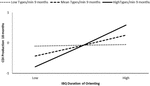
FIGURE i. Moderation effect of maternal types/min at 9 months on IBQ duration of orienting effect on CDI production at 18 months.
At 24 months, nosotros plant that the association between babe IBQ duration of orienting and child MLU at 24 months was moderated by maternal lexical variability (i.e., types/min) at vi months (β = 0.27, p = 0.04) and 9 months (β = 0.36, p < 0.01), simply we did not observe significant moderation issue of maternal lexical variability at 12 months (β = -0.01, p = 0.92). The model at 6 months explained the 26% of the variance, and the interaction was significant for types/min at the 84th percentile (β = 0.46, p < 0.01) (see Effigy 2). The model at 9 months explained the 29% of the variance and the interaction was significant for types/min at the 50th percentile (β = 0.26, p = 0.03) and at the 84th percentile (β = 0.67, p < 0.01) (see Effigy three). Higher IBQ elapsing of orienting competences were associated with higher child syntactic competence at 24 months for loftier maternal lexical variability at 6 months, and medium and high maternal lexical variability at ix months.
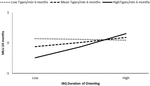
Figure 2. Moderation outcome of maternal types/min at 6 months on IBQ duration of orienting consequence on child MLU at 24 months.
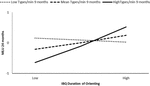
Effigy 3. Moderation result of maternal types/min at nine months on IBQ duration of orienting result on kid MLU at 24 months.
Moderator: Maternal Syntactic Complexity (i.e., MLU)
The association between baby elapsing of orienting and infant eighteen months CDI (number of words) was moderated by maternal MLU at 6 months (β = 0.31, p = 0.03), just non by maternal MLU at 9 or 12 months (β = 0.sixteen, p = 0.23 and β = 0.01, p = 0.97, respectively). The model at 6 months explained the 26% of the variance, and the interaction was significant for MLU at the 84th percentile (β = 0.64, p < 0.01). Low IBQ duration of orienting competencies were associated with less language production at 18 months for infants who experienced mothers with high syntactic complexity during the interaction at 6 months (see Figure 4).
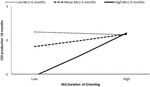
Figure four. Moderation effect of maternal MLU at six months on IBQ duration of orienting effect on CDI production at 18 months.
The association between infant duration of orienting and kid MLU at 24 months was moderated past maternal MLU at vi months (β = 0.37, p < 0.01) only was non moderated by maternal MLU at 9 months (β = 0.22, p = 0.09) or at 12 months (β = 0.06, p = 0.61) (Table 3). The model at 6 months explained the twoscore% of the variance, and the interaction was significant for maternal MLU at the 84th percentile (β = 0.63, p < 0.01). Lower IBQ duration of orienting was associated with lower syntactic competence at 24 months for infants whose mothers spoke with higher syntactic complexity at 6 months (run across Figure 5).

TABLE iii. Moderation results, predictor IBQ Elapsing of Orienting.
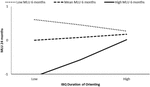
FIGURE five. Moderation upshot of maternal MLU at 6 months on IBQ duration of orienting effect on child MLU at 24 months.
IBQ Smile and Laugher Effect on Language Acquisition Moderated by Maternal Input1
Moderator: Maternal Lexical Variability (i.east., Types Frequency Per Infinitesimal)
The1 association between IBQ smile and laughter and CDI production at eighteen months, was not moderated by the quality of maternal lexical variability at 6, 9, or 12 months. Similarly, maternal lexical variability at vi, 9, or 12 months did non moderate the association between infant positive impact (i.e., IBQ smile and laughter) and child MLU at 24 months.
Moderator: Maternal Syntactic Complexity (i.eastward., MLU)
None of the models examining the moderating role of maternal MLU between IBQ grin and laugher and CDI production at 18 months and child MLU at 24 months were significant.
IBQ Distress to Limitations Effect on Language Acquisition Moderated by Maternal Input
Moderator: Maternal Lexical Variability (i.e., Types Frequency Per Minute)
None of the moderating furnishings of maternal lexical variability between IBQ distress to limitations and child CDI at 18 months were significant (see Tabular array 4). Yet, despite no moderation effect, the temperamental feature of IBQ distress to limitations had a near-significant chief effect in the 6 months (β = 0.28, p = 0.05), ix months (β = 0.27, p = 0.06), and 12 months (β = 0.28, p = 0.05) models. High IBQ distress to limitations values were independently associated with better language production at 18 months, albeit at a level that trended toward significance.

TABLE 4. Moderation results, predictor IBQ distress to limitations.
None of the models examining the moderating function of maternal lexical variability between IBQ distress to limitations and child MLU at 24 months were significant (run across Table 4).
Moderator: Maternal Syntactic Complexity (i.eastward., MLU)
None of the moderating effects of maternal syntactic complexity between IBQ distress to limitations and kid CDI at eighteen months were significant, nevertheless, a significant main upshot of IBQ distress to limitations was observed in the 6 months (β = 0.29, p = 0.04), ix months (β = 0.33, p = 0.02), and 12 months (β = 0.35, p = 0.01) moderation models. High IBQ distress to limitations was associated with meliorate language production at 18 months independently from maternal syntactic complexity at 6, 9, and 12 months. Despite no significant moderation effect of maternal syntactic complication, maternal MLU demonstrated a significant principal effect at 6 months (β = -0.45, p < 0.01) and 12 months (β = 0.l, p < 0.01) on 24 months child MLU production. There was no main effect of maternal MLU on 24 months child MLU in 9 months moderation models (β = 0.30, p = 0.80).
Discussion
The principal aim of the electric current study was to examine whether the quality of maternal linguistic input (i.e., maternal lexical variability and maternal syntactic complexity) chastened the clan betwixt infant temperamental characteristics (duration of orienting; grinning and laughter; distress to limitations scales) and baby linguistic competence (i.e., vocabulary competence at 18 months and syntactic complexity at 24 months). We found that the association between infant attentional temperamental characteristics (i.e., IBQ elapsing of orienting) and vocabulary and syntactic competence at the stop of the second yr were moderated by the lexical variability and syntactic complexity of maternal input at 6 and 9 months of age. Specifically, infants with greater elapsing of orienting scores who experienced a female parent speaking with greater lexical variability and more syntactic complexity at 6 and 9 months showed better linguistic skills at 18 and 24 months. Regarding the association of infant affective temperamental traits with later language evolution, the story appears to be more complex. We found no association (main furnishings or moderation) between the expression of positive affect and infant language development. Notwithstanding, reverse to expectations, nosotros plant a positive clan between the temperamental characteristic of negative bear upon (i.east., distress to limitations) and subsequently language evolution. Infants who were rated as having more negative affect (i.e., exhibited higher distress to limitations scores) showed better language product at xviii months when decision-making for maternal syntactic complexity (i.eastward., maternal MLU).
Mother–infant interactions are characterized from the 5th month of life by a transition from face-to-face dyadic interactions to triadic interactions where objects become an increasing focus of exact and attentional exchanges (Trevarthen and Aitken, 2001; Striano and Stahl, 2005). As the infant's interest in the environment begins to abound, the mother follows the infant's focus of interest, and scaffolds the baby's interactions with the environment by labeling objects of interest and giving meaning to the focus of the interaction (Baumwell et al., 1997). This developmental interchange is foundational for linguistic communication acquisition because infants starting time to detect words and to connect sounds to the referential objects and actions. The power of the babe to pay attention to these social exchanges likely underlies the infant's ability to learn linguistic communication, and relatedly, articulation attention abilities during the first twelvemonth of life have been shown to facilitate language acquisition (Carpenter et al., 1998; Morales et al., 2000; Salley and Dixon, 2007). Post-obit this rationale, we theorized that infants scoring higher on the duration of orienting calibration (a mensurate of the infant's ability to focus on the environment) might manifest better abilities to focus on the interactions with the mother, and consequently, to benefit from the quality of maternal input resulting in more optimal language development. Our results indicated that the infant's attentional capacity is associated with language development, merely this association is dependent on the quality of the maternal linguistic environment. In environments of medium and higher maternal lexical and syntactic complexity at 6 and nine months, infants with college attentional capacities (i.east., college duration to orienting scores) manifested ameliorate language product at 18 and 24 months. Interestingly, when these highly attentive infants received a less stimulating input they showed poorer language competencies, fifty-fifty when compared with children with lower attentional abilities. Even for children with higher attentional capacities, linguistic communication acquisition was not fostered in the absence of a stimulating linguistic environment. This could explicate why some studies lack to detect an association betwixt attentional aspects and better language conquering (c.f. Kubicek and Emde, 2012).
Surprisingly, for infants with lower attentional abilities a richer maternal input at 6 and 9 months was associated with lower language competencies. A potential caption is that these infants tend to be more distracted during interactions and may exist less able to engage in triadic interactions which include a focus on the mother and on objects. In this situation, a complex and rich linguistic environs may be an added distraction (or may be interpreted as beingness intrusive) for the infant, thereby contributing to suboptimal language development in less attentive infants. Consistent with this theory, Carpenter et al. (1998) found that while the quantity of maternal comments to babe'due south focus of interaction at 9 and 12 months was associated with meliorate language comprehension and product at xv months, the quantity of pb comments typical of intrusive interaction were associated with lower language competences.
The lack of findings apropos the interaction of the temperamental trait of elapsing of orienting and 12-months maternal input was unexpected since previous studies found positive clan's fifty-fifty later (c.f. Salley and Dixon, 2007). One possible explanation is that while the consummate range of joint attention skills emerge between 12 and 18 months of age (Salley and Dixon, 2007) it is possible that toward the end of the start year, individual differences in attention may cease to predict private differences in language evolution thereby bookkeeping for our non-pregnant moderation findings at 12-months. An alternate explanation is that the infant temperamental characteristics assessed at iii months may not exist representative of the temperamental skills at 12 months due to developmental changes over age. An additional assessment of temperament at the terminate of the offset year could help clarify this possibility.
Opposite to what has been previously demonstrated in the literature, we institute that children with more than difficult temperament characterized past a greater distress to limitations at 3 months showed better language production abilities at 18 and 24 months. Our findings are supported by the branch of the literature which has suggested that negative impact expression, viewed as an emotional regulatory strategy, may create developmental opportunities by eliciting the mother's assistance to go on engaging in goal-directed behavior (Moreno and Robinson, 2005). Greater expressions of negativity may elicit more than attending from their mothers, resulting in more dyadic interchanges which may promote vocabulary acquisition. This is independent from the quality of the input they receive at 6 and 9 months. While negative affect seems to play a part in language development, we failed to discover association between the expression of positive bear on (e.k., higher scores on the smile and laughter scale), and language product at the end of the second yr. One potential explanation for these findings is that previous research has used direct measures of positive affect expressions rather than temperamental calibration derived from a questionnaire, which may contribute to our lack of a significant association. Moreover, as Laake and Bridgett (2018) reported, it is possible that previous research examining the interactions of maternal factors with infant positive affect used global measures of maternal responsiveness rather than the linguistic quality of the input, which was the focus of our study. Alternatively, our lack of findings should be interpreted with caution since our non-significant findings may be related to a modest sample size which was underpowered to notice pregnant effects of moderation.
Our study had some strengths and limitations. The longitudinal design with multiple measurements of maternal linguistic input (maternal lexical complication and maternal syntactic complexity) and child language outcomes using both observational and parental measures is a notable strength of our study. Moreover, consistent with a transactional view of child development (Sameroff, 1975), our findings highlight the importance of both individual and contextual aspects when examining kid linguistic communication development.
Nosotros acknowledge some limitations of our study. First, our measurement of temperament was assessed only once, early in infancy. While this was a deliberate conclusion to examine the furnishings of early temperamental characteristics on later outcomes, it is possible that temperament could vary over historic period, and a replication of these findings with multiple temperamental measures would improve the force of our findings (Dixon and Smith, 2000). Another limitation was the lack of inclusion of other dimensions of temperament to consider whether other temperamental traits are involved in the process. Some other limitation is our employ of parent-written report measures for our assessment, rather than an observational assessment of temperamental traits. Finally, we acknowledge that nosotros ran a number of statistical models, thus increasing the possibility of finding less reliable significance. This is the get-go written report on the topic, and we decided to run many models in guild to be able to give a complete exploratory view of the phenomena. Time to come studies with larger samples and other measures should aim to replicate our findings.
Despite these limitations, we believe that our findings have several implications, peculiarly for intervention research. When conducting interventions to ameliorate child linguistic communication abilities, temperamental aspects such every bit attentional command should be taken into consideration. Many intervention programs ask the mother to increase linguistic stimulation. Our findings suggest that this may be helpful if the child has practiced attentional abilities, while may have a detrimental effect if the child is easily distracted.
Conclusion
The nowadays study provides important contributions to the research on the association between temperament and language. Since evolution emerges in the context of bidirectional interactions between the infant and the surround it is necessary to consider the contextual factors such every bit the quality of maternal input when exploring the effects of temperament on language evolution (Sameroff, 1975). At the aforementioned time, this study highlights that temperamental characteristics contribute variably to linguistic communication outcomes in different caregiving (linguistic) environments, thereby underscoring the importance of considering context when exploring the hazard and protective factors in developmental science.
Writer Contributions
MS and MF developed the written report concept. All authors contributed to the study design and drafted the manuscript. TA, MF, and GG performed the data collection and coding. MS performed the information analysis. MS, MF, TA, and PS wrote the final version of the manuscript and all authors approved information technology for submission.
Conflict of Interest Statement
The authors declare that the enquiry was conducted in the absence of any commercial or financial relationships that could be construed as a potential conflict of interest.
Footnotes
- ^ Results and tables available upon asking to authors.
References
Aureli, T., Coppola, G., Picconi, L., Grazia, A., and Ponzetti, S. (2015). Relationships between regulatory temperament dimensions and self-regulatory behaviors at 4 and 6 months of historic period. Infant Behav. Dev. 38, 162–166. doi: ten.1016/j.infbeh.2014.12.013
PubMed Abstract | CrossRef Total Text | Google Scholar
Baer, J., Schreck, M., Althoff, R. R., Rettew, D., Harder, Five., Ayer, L., et al. (2015). Child temperament, maternal parenting behavior, and child social performance. J. Child Fam. Stud. 24, 1152–1162. doi: x.1007/s10826-014-9924-5
PubMed Abstract | CrossRef Full Text | Google Scholar
Bates, Eastward., Bretherton, I., and Snyder, 50. S. (1991). From Beginning Words to Grammar: Individual Differences and Dissociable Mechanisms, Vol. 20. Cambridge: Cambridge University Printing.
Google Scholar
Baumwell, L., Tamis-LeMonda, C. S., and Bornstein, Thou. H. (1997). Maternal verbal sensitivity and child linguistic communication comprehension. Babe Behav. Dev. 20, 247–258. doi: 10.1016/S0163-6383(97)90026-half dozen
CrossRef Full Text | Google Scholar
Blossom, L. (1990). "Developments in expression: impact and oral communication," in Psychological and Biological Approaches to Emotion, eds N. 50. Stein, L. Bennett, and T. Trabasso (Hillsdale, NJ: Lawrence Erlbaum Assembly), 215–246.
Google Scholar
Flower, L., Beckwith, R., and Capatides, J. B. (1988). Developments in the expression of impact. Baby Behav. Dev. 11, 169–186. doi: 10.1016/S0163-6383(88)80004-3
CrossRef Full Text | Google Scholar
Bloom, L., and Capatides, J. B. (1987). Expression of affect and the emergence of language. Kid Dev. 58, 1513–1522. doi: 10.2307/1130691
CrossRef Full Text | Google Scholar
Bloom, L., Tinker, E., and Scholnick, E. G. (2001). The intentionality model and language acquisition: appointment, endeavor, and the essential tension in development. Monogr. Soc. Res. Child Dev. 66, i–eight, 1–91.
PubMed Abstruse | Google Scholar
Canfield, C. F., and Saudino, M. J. (2016). The influence of infant characteristics and attending to social cues on early vocabulary. J. Exp. Kid Psychol. 150, 112–129. doi: 10.1016/j.jecp.2016.05.005
PubMed Abstract | CrossRef Total Text | Google Scholar
Carpenter, Thousand., Nagell, Thousand., Tomasello, One thousand., Butterworth, G., and Moore, C. (1998). Social cognition, articulation attending, and communicative competence from nine to fifteen months of age. Monogr. Soc. Res. Child Dev. 63, i–vi, 1–143. doi: 10.2307/1166214
PubMed Abstract | CrossRef Total Text | Google Scholar
Caselli, M. C., and Casadio, P. (1995). Il Primo Vocabulario Del Bambino. Milan: Franco Angeli.
Google Scholar
Coppola, Thou., Aureli, T., Grazia, A., and Ponzetti, S. (2016). Reunion patterns in the yet-face paradigm as predicted by maternal sensitivity and dyadic coordination. Infancy 21, 453–477. doi: 10.1111/infa.12115
CrossRef Total Text | Google Scholar
Dixon, W. E., and Shore, C. (1997). Temperamental predictors of linguistic manner during multiword acquisition. Babe Behav. Dev. 20, 99–103. doi: 10.1016/S0163-6383(97)90065-5
CrossRef Full Text | Google Scholar
Dixon, Due west. Due east., and Smith, P. H. (2000). Links between early temperament and language conquering. Merrill Palmer Q. 46, 417–440.
Google Scholar
Fasolo, Chiliad., D'Odorico, L., Costantini, A., and Cassibba, R. (2010). The influence of biological, social, and developmental factors on language acquisition in pre-term born children. Int. J. Speech Lang. Pathol. 12, 461–471. doi: 10.3109/17549507.2011.486445
PubMed Abstract | CrossRef Total Text | Google Scholar
Gartstein, 1000. A., and Rothbart, M. K. (2003). Studying infant temperament via the revised infant beliefs questionnaire. Infant Behav. Dev. 26, 64–86. doi: x.1016/S0163-6383(02)00169-8
PubMed Abstract | CrossRef Total Text | Google Scholar
Golinkoff, R. M., Can, D. D., Soderstrom, G., and Hirsh-Pasek, K. (2015). (Babe) talk to me: the social context of infant-directed speech and its effects on early on linguistic communication acquisition. Curr. Dir. Psychol. Sci. 24, 339–344. doi: 10.1177/0963721415595345
CrossRef Total Text | Google Scholar
Hampson, J., and Nelson, K. (1993). The relation of maternal language to variation in rate and fashion of language acquisition. J. Kid Lang. 20, 313–342. doi: ten.1017/S0305000900008308
PubMed Abstract | CrossRef Full Text | Google Scholar
Hayes, A. F. (2017). Introduction to Mediation, Moderation, and Conditional Process Analysis: A Regression-Based Approach. New York, NY: Guilford Publications.
Google Scholar
Huttenlocher, J., Haight, W., Bryk, A., Seltzer, M., and Lyons, T. (1991). Early vocabulary growth: relation to linguistic communication input and gender. Dev. Psychol. 27, 236–248. doi: x.1037/0012-1649.27.ii.236
PubMed Abstruse | CrossRef Full Text | Google Scholar
Karrass, J., and Braungart-Rieker, J. M. (2003). Parenting and temperament as interacting agents in early on language development. Parent. Sci. Pract. 3, 235–259. doi: x.1207/S15327922PAR0303_03
CrossRef Full Text | Google Scholar
Kitamura, C., and Burnham, D. (2003). Pitch and communicative intent in mother's speech: adjustments for age and sex in the first year. Infancy 4, 85–110. doi: 10.1207/S15327078IN0401_5
CrossRef Full Text | Google Scholar
Kubicek, Fifty. F., and Emde, R. N. (2012). Emotional expression and language: a longitudinal report of typically developing earlier and later talkers from 15 to 30 months. Baby Ment. Health J. 33, 553–584. doi: 10.1002/imhj.21364
PubMed Abstract | CrossRef Full Text | Google Scholar
Laake, L. Yard., and Bridgett, D. J. (2014). Happy babies, communicative toddlers: infant positive affect facilitates early expressive, simply not receptive language. Infant Behav. Dev. 37, 29–32. doi: 10.1016/j.infbeh.2013.12.006
PubMed Abstract | CrossRef Full Text | Google Scholar
Laake, L. K., and Bridgett, D. J. (2018). Early linguistic communication development in context: interactions between infant temperament and parenting characteristics. Early on Educ. Dev. 29, 730–746. doi: 10.1080/10409289.2018.1436366
CrossRef Full Text | Google Scholar
Lieven, E. V. (1997). "Variation in a crosslinguistic context," in The Cross-Linguistic Written report of Language Acquisition: Expanding the Contexts, Vol. five, ed. D. I. Slobin (Hillsdale, NJ: Lawrence Erlbaum), 199–263.
PubMed Abstract | Google Scholar
MacWhinney, B. (2000). The CHILDES Project: Tools for Analyzing Talk: Volume I: Transcription Format and Programs, Book Two: The Database. Cambridge, MA: MIT Press.
Google Scholar
McNally, S., and Quigley, J. (2014). An Irish cohort study of hazard and protective factors for infant language development at 9 months. Infant Child Dev. 23, 634–649. doi: x.1002/icd.1861
CrossRef Full Text | Google Scholar
Molfese, V. J., Rudasill, Thousand. M., Beswick, J. L., Jacobi-Vessels, J. L., Ferguson, M. C., and White, J. 1000. (2010). Infant temperament, maternal personality, and parenting stress as contributors to infant developmental outcomes. Merrill Palmer Q. 56, 49–79. doi: 10.1353/mpq.0.0039
CrossRef Total Text | Google Scholar
Morales, Grand., Mundy, P., Delgado, C. E., Yale, Thousand., Neal, R., and Schwartz, H. K. (2000). Gaze following, temperament, and language development in half-dozen-calendar month-olds: a replication and extension. Infant Behav. Dev. 23, 231–236. doi: ten.1016/S0163-6383(01)00038-8
CrossRef Full Text | Google Scholar
Moreno, A. J., and Robinson, J. L. (2005). Emotional vitality in infancy as a predictor of cognitive and language abilities in toddlerhood. Infant Kid Dev. 14, 383–402. doi: 10.1002/icd.406
CrossRef Full Text | Google Scholar
Newman, R. South., Rowe, Thousand. 50., and Ratner, N. B. (2016). Input and uptake at 7 months predicts toddler vocabulary: the office of kid-directed voice communication and infant processing skills in language development. J. Child Lang. 43, 1158–1173. doi: x.1017/S0305000915000446
PubMed Abstract | CrossRef Total Text | Google Scholar
Penela, E. C., Walker, O. L., Degnan, G. A., Fox, N. A., and Henderson, H. A. (2015). Early on behavioral inhibition and emotion regulation: pathways toward social competence in middle childhood. Child Dev. 86, 1227–1240. doi: ten.1111/cdev.12384
PubMed Abstruse | CrossRef Total Text | Google Scholar
Pérez-Pereira, Yard., Fernández, P., Resches, One thousand., and Gómez-Taibo, G. L. (2016). Does temperament influence language development? Evidence from preterm and full-term children. Babe Behav. Dev. 42, xi–21.
Google Scholar
Rothbart, Chiliad. Chiliad. (1981). Development of individual differences in temperament. Adv. Dev. Psychol. i, 37–86.
Google Scholar
Rothbart, M. K. (2007). Temperament, evolution, and personality. Curr. Dir. Psychol. Sci. 16, 207–212. doi: ten.1111/j.1467-8721.2007.00505.ten
CrossRef Full Text | Google Scholar
Rowe, M. 50. (2008). Child-directed spoken language: relation to socioeconomic status, knowledge of child evolution and child vocabulary skill. J. Child Lang. 35, 185–205. doi: 10.1017/S0305000907008343
PubMed Abstruse | CrossRef Full Text | Google Scholar
Rubin, D. H., Crehan, E. T., Althoff, R. R., Rettew, D. C., Krist, E., Harder, V., et al. (2017). Temperamental characteristics of withdrawn beliefs problems in children. Child Psychiatry Hum. Dev. 48, 478–484. doi: 10.1007/s10578-016-0674-z
PubMed Abstruse | CrossRef Full Text | Google Scholar
Saffran, J. R., Werker, J. F., and Werner, L. A. (2006). "The baby's auditory earth: hearing, speech, and the beginnings of language," in Handbook of Child Psychology, 6th Edn, eds Westward. Damon and R. Thou. Lerner (New York, NY: John Wiley & Sons), 58–108.
Google Scholar
Saint-Georges, C., Chetouani, M., Cassel, R., Apicella, F., Mahdhaoui, A., Muratori, F., et al. (2013). Motherese in interaction: at the cross-road of emotion and knowledge? (A systematic review). PLoS I 8:e78103. doi: x.1371/journal.pone.0078103
PubMed Abstract | CrossRef Total Text | Google Scholar
Slomkowski, C. L., Nelson, K., Dunn, J., and Plomin, R. (1992). Temperament and language: relations from toddlerhood to center babyhood. Dev. Psychol. 28, 1090–1095. doi: x.1037/0012-1649.28.vi.1090
CrossRef Full Text | Google Scholar
Soderstrom, M. (2007). Across babytalk: re-evaluating the nature and content of speech communication input to preverbal infants. Dev. Rev. 27, 501–532. doi: 10.1016/j.dr.2007.06.002
CrossRef Total Text | Google Scholar
Trevarthen, C., and Aitken, K. J. (2001). Infant intersubjectivity: research, theory, and clinical applications. J. Child Psychol. Psychiatry 42, 3–48.
PubMed Abstract | Google Scholar
Ullsperger, J. M., Nigg, J. T., and Nikolas, M. A. (2016). Does child temperament play a role in the clan between parenting practices and child attention deficit/hyperactivity disorder? J. Abnorm. Child Psychol. 44, 167–178. doi: ten.1007/s10802-015-9982-1
PubMed Abstract | CrossRef Full Text | Google Scholar
Weisleder, A., and Fernald, A. (2013). Talking to children matters: early language experience strengthens processing and builds vocabulary. Psychol. Sci. 24, 2143–2152. doi: x.1177/0956797613488145
PubMed Abstract | CrossRef Total Text | Google Scholar
Westerlund, M., and Lagerberg, D. (2008). Expressive vocabulary in xviii-month-old children in relation to demographic factors, mother and child characteristics, advice style and shared reading. Child Intendance Health Dev. 34, 257–266. doi: ten.1111/j.1365-2214.2007.00801.x
PubMed Abstract | CrossRef Full Text | Google Scholar
Wolfe, C. D., and Bong, M. A. (2007). The integration of knowledge and emotion during infancy and early on childhood: regulatory processes associated with the evolution of working retentiveness. Brain Cogn. 65, iii–13. doi: 10.1016/j.bandc.2006.01.009
PubMed Abstract | CrossRef Total Text | Google Scholar
Zampini, 50., Fasolo, K., and D'Odorico, L. (2012). Characteristics of maternal input to children with down's syndrome: a comparison with vocabulary size and chronological age matched groups. First Lang. 32, 324–342. doi: x.1177/0142723711410780
CrossRef Total Text | Google Scholar
ralstonjactione73.blogspot.com
Source: https://www.frontiersin.org/articles/405003
0 Response to "Temperament Refers to What Aspect of a Childs Development?"
Post a Comment